
The Project

A global history of fascism through the lens of its temporal worldview
The rise of fascism in the early 20th century challenged liberal internationalism and sought to reshape the global order. Fascist ideology was grounded in a specific temporal worldview: fascists everywhere repurposed the historical past, saw their present as a watershed moment and aimed to accelerate it towards a redemptive future when time would stand still. The compatibility of this world view enabled transnational cooperation among fascist movements and regimes, despite their significant national variations. The ERC-funded INTEMPO project offers an innovative global history of fascism, approached through the lens of temporality. Fascist temporalities are used as an entry point for elucidating fascism’s restructuring of space – social space internally and geopolitical space internationally – and its complex engagement with capitalism and colonialism, respectively.

The Principal Investigator
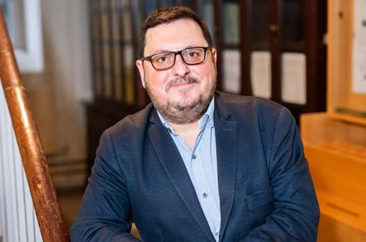
Prof Raul Cârstocea is Professor of History at Maynooth University.
He completed his PhD at University College London and has previously worked as Lecturer in Modern European History at the University of Leicester, Lecturer in European Studies at the Europa Universität Flensburg, Senior Research Associate at the European Centre for Minority Issues, and Teaching Fellow at University College London. He has held research fellowships at the Vienna Wiesenthal Institute for Holocaust Studies, the Institute for East and Southeast European Studies in Regensburg, the NIOD Institute for War, Holocaust and Genocide Studies in Amsterdam, King’s College London, and the Imre Kertész Kolleg Jena.
His research interests focus on antisemitism, nationalism, fascism, and more broadly on state formation and nation-building processes in 19th and 20th century Central, Eastern, and South-Eastern Europe and their consequences for minority groups. He is co-editor of the Modern History of Politics and Violence book series at Bloomsbury and Chair of the Scientific Advisory Council of the Observatory on History Teaching in Europe at the Council of Europe.

The Funder
The European Research Council (ERC) is providing funding for the INTEMPO Project in the amount of €2 million.
The ERC’s mission is to encourage the highest quality research in Europe through competitive funding and to support investigator-driven frontier research across all fields, on the basis of scientific excellence. The term ‘frontier research’ has been coined for ERC activities because they intend to result in fundamental advances at and beyond the ‘frontier’ of knowledge. By challenging Europe’s brightest minds, the ERC expects that its grants will help to bring about new and unpredictable scientific and technological discoveries.
The Host Institution

Maynooth University is one of four constituent universities of the National University of Ireland. It is a place of lively contrasts–a modern institution, dynamic, rapidly-growing, research-led and engaged, yet grounded in historic academic strengths and scholarly traditions. Maynooth’s unique collegial culture fosters an interdisciplinary approach to research, which its world-class academics bring to bear in tackling some of the most fundamental challenges facing society today. The University’s research institutes and centres consolidate and deliver this impact as vibrant communities of learning, discovery and creation. Research at Maynooth also is very much central to its teaching, and the University prides itself on placing equal value on its research and teaching missions.
The Arts and Humanities Institute is Maynooth’s flagship institute for groundbreaking, interdisciplinary research across the arts and humanities. Established in 2018, the AHI now leads research on one of the University’s five research beacons: Heritage, Language and Culture. This area of excellence is expressed through collective strengths that lead European research in: mind and material in the middle ages, contested histories, medical humanities, creative practice & embodied knowledges, intersectional humanities, motherhoods, genders and sexualities, critical anthropocenes, multilingualism and social justice, and litríocht, teanga agus cultúr (research in the Irish language).
Learn more about the host institution.
News and Events

Our latest blog post

Our most recent event
Our most recent publication