
About INTEMPO
A global history of fascism through the lens of its temporal worldview
The rise of fascism in the early 20th century challenged liberal internationalism and sought to reshape the global order. Fascist ideology was grounded in a specific temporal worldview: fascists everywhere repurposed the historical past, saw their present as a watershed moment and aimed to accelerate it towards a redemptive future when time would stand still. The compatibility of this world view enabled transnational cooperation among fascist movements and regimes, despite their significant national variations. The ERC-funded INTEMPO project offers an innovative global history of fascism, approached through the lens of temporality. Fascist temporalities are used as an entry point for elucidating fascism’s restructuring of space – social space internally and geopolitical space internationally – and its complex engagement with capitalism and colonialism, respectively.

About the Project

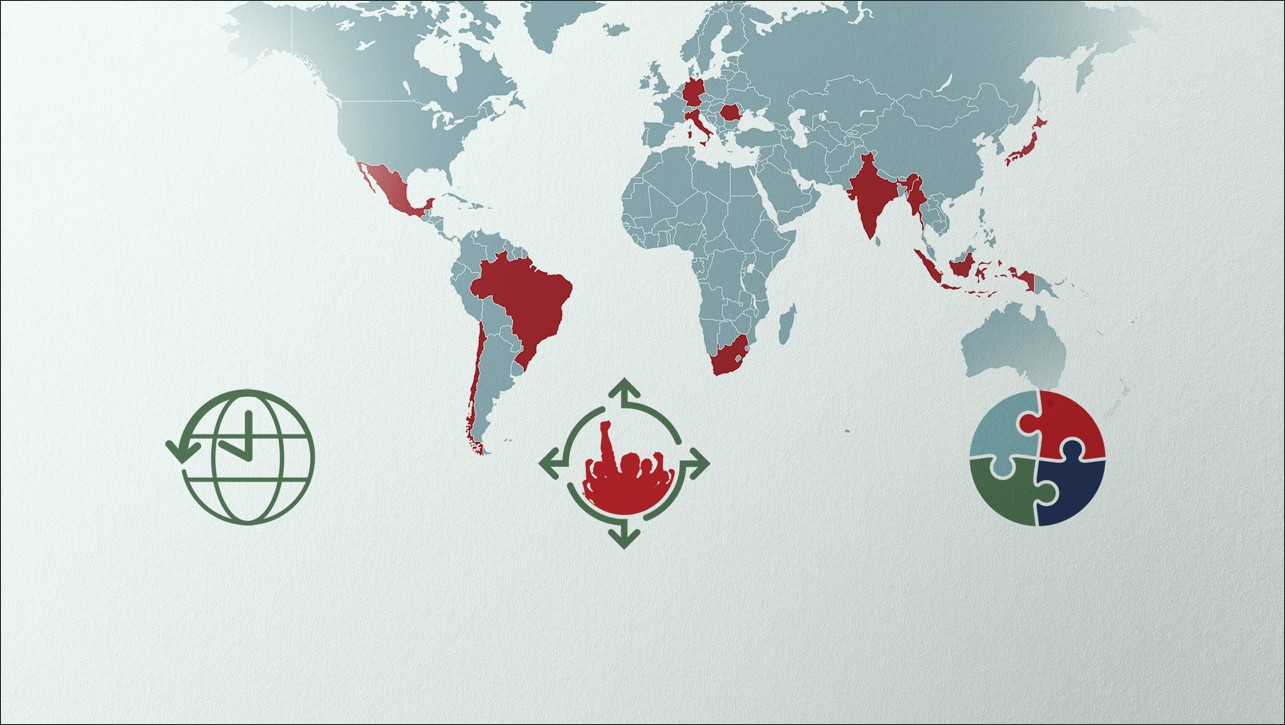
The rise of fascism in the early 20th century challenged liberal internationalism and sought to reshape the global order. Fascist ideology was grounded in a specific temporal worldview: fascists everywhere repurposed the historical past, saw their present as a watershed moment and aimed to accelerate it towards a redemptive future when time would stand still. The compatibility of this world view enabled transnational cooperation among fascist movements and regimes, despite their significant national variations. The ERC-funded INTEMPO project offers an innovative global history of fascism, approached through the lens of temporality. Fascist temporalities are used as an entry point for elucidating fascism’s restructuring of space – social space internally and geopolitical space internationally – and its complex engagement with capitalism and colonialism, respectively.
Themes
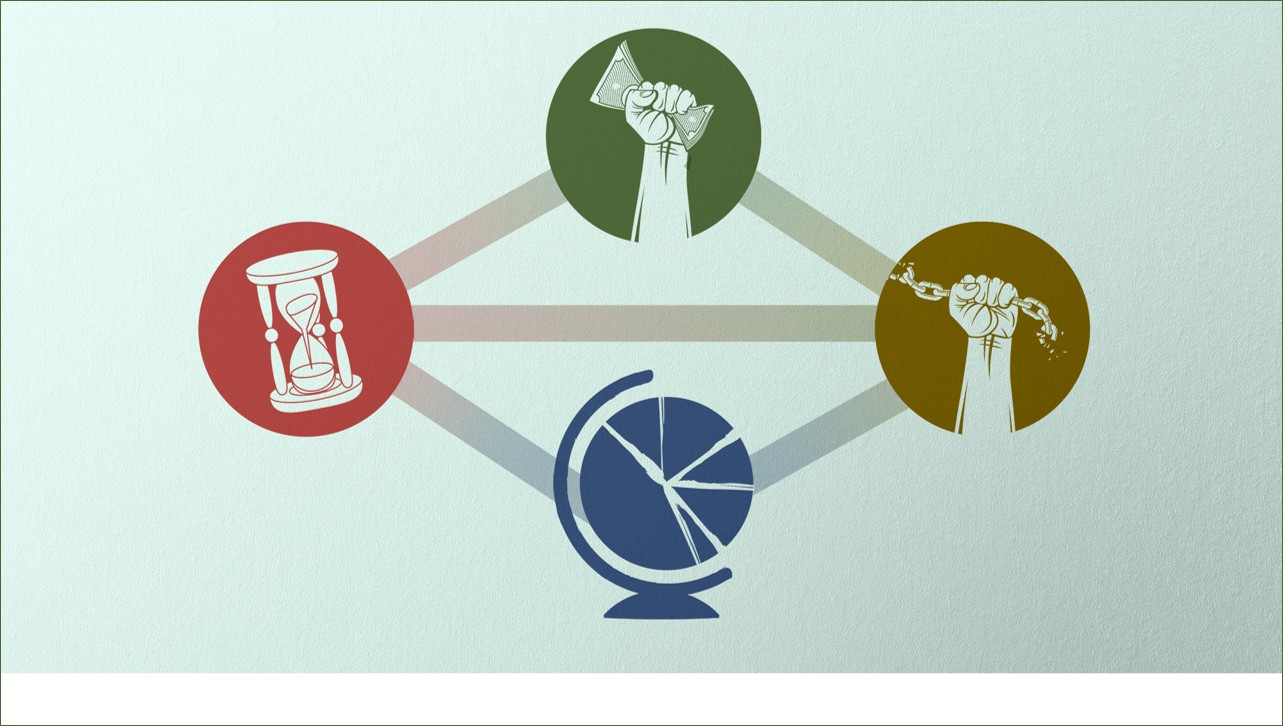
The project is divided into four research-oriented work packages (WP), each with a specific objective (O) and driven by two research questions (RQ). The project takes a three-pronged approach, where the first line of enquiry (fascist temporalities) informs and underpins the others: the temporal restructuring of 1) social and 2) geopolitical space, and 3) the global dimension of fascism and its plural yet compatible visions of a ‘New Order’.
Work Package (WP) 1: The fascist politics of time
this work package will unpack fascist elites’ temporal projections and their effects on reorganising power
structures, which in turn acted to reshape time. In line with a multi-scalar approach that will run throughout
the project, WP1 will examine the impact of this restructuring on both social and geopolitical space.
- RQ1: How were fascist temporalities articulated at societal level and what was their relationship to power?
- RQ2: What was the effect of the fascist chronopolitics on movements’ and regimes’ geopolitical aspirations?
WP2: Micro-temporalities: The re-ordering of social space and fascism’s entanglement with capitalism
At micro- and meso-levels we are interested in elite projections and also in the effects of the fascist temporal restructuring on the everyday experiences of rank-and-file members, and how these differed according to gender. For this purpose, we will analyse relevant ego documents (letters, diaries, memoirs) of participants in these events, members of labour organisations, leisure institutions, etc.
- RQ3: How was the state control of the economy and its ambiguous relationship to private property shaped by
the fascist politics of time? - RQ4: What were the temporal dimensions of fascist social policies and what were their gendered effects on
personal experiences of time?
WP3: Macro-temporalities: The re-ordering of geopolitical space and fascism’s relation to colonialism
We will analyse the temporal dimension of the fascist visions of empire and colonialism in sources relevant to: a) the specific colonial policies implemented in Manchuria, Korea, and South Asia by imperial Japan, in North Africa by Fascist Italy, or in occupied Eastern Europe by Nazi Germany; b) the frequent critiques of Western colonialism that can be encountered in fascist academic publications, mass media, propaganda speeches; c) the evidence of military and political support provided to anti-colonial activists; d) the views of anti-colonial activists about fascism. This work package thus also connects to the literature discussing the Holocaust in relation to colonialism, against the background of fascist violence and warfare more generally, and the fascist temporal regime underpinning them. In this respect, it engages Alon Confino’s (2014: 16) hypothesis that “the Holocaust was about the Nazi dream of conquering historical time, past, present, and future” and seeks to respond to it from a perspective that reads fascism as a global phenomenon.
- RQ5: To what extent were fascist colonial aspirations qualitatively distinct from the ideology and practices of
- liberal colonialism?
- RQ6: How was the support and sympathy for non-European anti-colonial activists articulated with the racial hierarchies implicit in fascist ideology, and how was ‘empire’ conceptualised in non-European fascisms?
WP4: Fascism as a global anti-universalist project
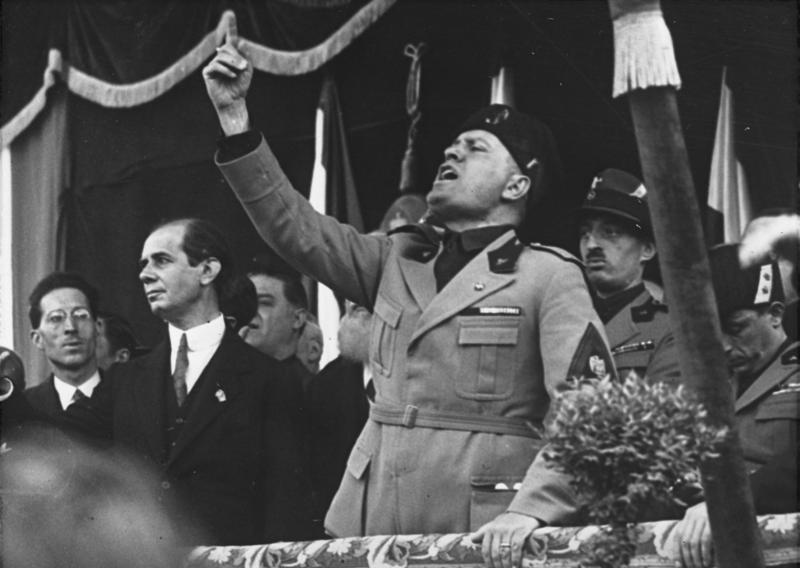
As the previous work package makes clear, the ultra-nationalist fascist temporal revolutions that intended to transform their societies and re-write history were never seen as limited to their respective national contexts, but as having world-historical significance. Regardless of how ‘small’ the context where fascism emerged, theirs was a battle for ‘Europe’, ‘Asia’, or civilisation itself.
- RQ7: How was fascism’s anti-universalist focus on national specificity made compatible with a project of global transformation?
- RQ8: Do the extensive connections between fascist movements and regimes and their visions of ‘the global’ allow us to speak of a fascist ‘world revolution’?
Aims
The project has the following main aims, providing new perspectives that break new ground not just in studies of fascism, but in global history, the history of empire and colonialism, and the interdisciplinary study of temporality:
- Undertake the first global history of interwar and wartime fascism that considers not just the Axis regimes, but also fascist movements, the transnational links between them, and the processes of cross-fertilisation resulting from these.
- Deconstruct and pluralise global history by considering the global visions of the opponents of liberal globalisation, fascist movements and regimes that rejected all universalist claims in favour of a worldview centred on the co-existence of unequal nations and structured explicitly by power relations.
- Reveal the central role of a specific temporal regime, with a shared ‘horizon of expectation’ – despite significant national variations corresponding to diverse ‘spaces of experience’ – in fascists’ plans to restructure geopolitical space and, internally, social space in their respective societies.
Objectives
- Examine the articulation of the fascist politics of time and the co-constitution of temporal and powerpolitical restructuring.
- Analyse the relationship of fascism and capitalism by exploring fascist movements’ and regimes’ plans for transforming both their respective societies and the global economy.
- Systematically analyse the global connections established by fascist regimes and organisations in their engagement with an international world order underpinned by colonialism.
- Analyse the global dimension of fascism and its plural yet compatible visions of a ‘new world order’ aimed against the universalist drive of the ideologies fascists opposed (liberalism and socialism).